Books
Fear

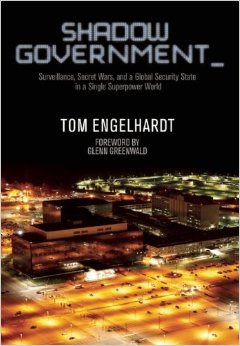
In 2008, when the US National Intelligence Council issued its latest report meant for the administration of newly elected President Barack Obama, it predicted that the planet's "sole superpower" would suffer a modest decline and a soft landing fifteen years hence. In his new book The United States of Fear, Tom Engelhardt makes clear that Americans should don their crash helmets and buckle their seat belts, because the United States is on the path to a major decline at a startling speed. Engelhardt offers a savage anatomy of how successive administrations in Washington took the "Soviet path"—pouring American treasure into the military, war, and national security—and so helped drive their country off the nearest cliff.

This is the startling tale of how fear was profitably shot into the national bloodstream, how the country—gripped by terror fantasies—was locked down, and how a brain-dead Washington elite fiddled (and profited) while America quietly burned.

Think of it as the story of how the Cold War really ended, with the triumphalist "sole superpower" of 1991 heading slowly for the same exit through which the Soviet Union left the stage twenty years earlier.

Read more »

Christian Parenti Tropic of Chaos

This sweeping narrative opens with the story of a single, ominous killing on the drought-stricken savannas of Northwest Kenya, a land where heavily armed pastoralists are fighting each other for water and cattle. Moving outward from the iconic death of one man, Parenti takes us on a tour of the "tropic of chaos," a belt of restive post-colonial states that lie along the planet's mid latitudes and are suffering the brunt of the planet's rough weather. He takes us to embattled areas of Afghanistan, India, and Pakistan, vividly describing the way environmental changes have fueled violence and military conflict; he travels to the slums and deserts of Brazil and Mexico, where climate-driven rural crises are pushing people into the furnace of the urban drug wars; and he scopes out the increasingly militarized U.S. border, revealing how this unraveling world in the South is being met by the military of the Global North.

Combining historical research with on-the-ground reporting, Parenti shows how environmental crisis is colliding with the twin legacies of cold war militarism and unbridled free market economics to cause fragile nations to disintegrate into failed states. He also critiques the way the countries of the Global North have responded to this dangerous new world: rather than adapt by defusing tensions and embracing cleaner forms of energy, these governments are responding with greater repression, surveillance, and a program of permanent counterinsurgency.

Tropic of Chaos is a survey of a world in peril and an urgent call to action by one of our most intrepid and respected international journalists: those living in the privileged Global North must recognize that our own future is inextricably linked to the fate of the struggling nations of the Global South. Despite its bleak panorama, Tropic of Chaos ends with pragmatic suggestions for moving toward a more just and sustainable world.

Read more »

Marlowe

By Jen Marlowe and Sami Al Jundi

As a teenager, Sami Al Jundi had one ambition: overthrowing Israeli occupation. With two friends he formed a militant cell and began building a bomb to use against the Israeli police. But their plans were derailed when the bomb exploded prematurely, killing one of his friends. Al Jundi was sentenced to ten years in prison.

The Hour of Sunlight describes Al Jundi’s extraordinary metamorphosis from a militant to a passionate advocate of nonviolence and peaceful reconciliation. Born to a family of Palestinian refugees in the Old City of Jerusalem, Al Jundi was only five years old when Israeli soldiers took over his home after the 1967 war. His parents refused to relocate to a massive refugee camp, beginning life again as refugees in another part of the Old City. In moving detail Sami describes how these and other realities (and indignities) of his early years caused his radicalization. 

Following his arrest, Al Jundi was bound and tortured for weeks by the Israeli General Security Service before beginning his ten-year prison sentence. Ironically it was in an Israeli jail that his personal transformation began: Al Jundi was welcomed into a highly organized, democratic community of political prisoners who required that members of their cell read, engage in political discourse on topics ranging from global revolutions to Russian literature. 

In the prison library Al Jundi found a book on Mahatma Gandhi. He was struck by one story in particular—a Hindu man who had murdered a Muslim baby came to Gandhi seeking repentance. Gandhi told him that there was one way that he could find peace again; he must raise a Muslim orphan for twenty years. It took two decades to build a life, Al Jundi reflected, but only seconds to destroy one.

Al Jundi left prison still determined to fight for his people’s rights—but with a very different notion of how to undertake that struggle. He discovered the Palestinian Center for the Study of Nonviolence, and later became supervisor of an Israeli-Palestinian coexistence center in Jerusalem. He kept his faith in reconciliation alive through the most difficult times, remaining determined to inspire a new generation to follow the path of peace and nonviolence.

The Hour of Sunlight, co-authored by Jen Marlowe, Al Jundi’s former colleague and author of Darfur Diaries: Stories of Survival, offers a perspective that is sorely missing from the mainstream media’s portrayal of Palestinians. Marked by honesty, humor, pain, and, ultimately, compassion for all Palestinians and Israelis, The Hour of Sunlight charts an inspiring journey of perseverance and personal transformation. In so doing it illuminates the Palestinian experience through the story of one man's impassioned struggle for Middle East peace.

Read more »

Prophets of War

When President Dwight D. Eisenhower gave his famous warning about the dangers of the military-industrial complex, he never would have dreamed that a single company could accumulate the kind of power and influence that is now wielded by Lockheed Martin. As a full-service weapons maker, Lockheed Martin receives over $29 billion a year in Pentagon contracts, or roughly one out of every ten dollars the Department of Defense doles out to private contractors. Prophets of War recounts the fascinating and often-frightening history of America's largest military contractor as well as its role in the formation of foreign policy.

The company has produced spy satellites; helped the Pentagon collect personal data on U.S. citizens; provided interrogators for employment at Guantanamo Bay; manufactured our highest-tech aircraft; and more. It has also been embroiled in numerous scandals — from bribing officials in the Netherlands, Italy, and Japan in exchange for the purchase of Lockheed airplanes in the 1970s, to the provision of $600 toilet covers and $7,000 coffee makers to the Pentagon in the 1980s.

William D. Hartung's enthralling exposé chronicles the growth of Lockheed Martin into one of the most influential corporations in the world, and examines the pivotal role the company has had in America's metastasizing military industrial complex. It asks: How has one company become the recipient of such a large portion of America's tax dollars through contracts with the Pentagon, NASA, the Department of Homeland Security, the Department of Energy, the NSA, and even the U.S. Census and the IRS? Hartung's meticulous, hard-hitting history follows Lockheed Martin's meteoric growth and unravels how this arms industry giant has helped shape U.S. foreign policy for decades.

Read more »

Bhutto

In September 1996, a 14-year-old Fatima Bhutto hid in a windowless dressing room, shielding her baby brother while shots rang out in the streets outside the family home in Karachi. This was the evening that her father Murtaza was murdered, along with six of his associates. In December 2007, Benazir Bhutto, Fatima's aunt, and the woman she had publicly accused of ordering her father's murder, was assassinated in Rawalpindi. It was the latest in a long line of tragedies for one of the world's best-known political dynasties.

Songs of Blood and Sword tells the story of a family of rich feudal landlords—the proud descendants of a warrior caste—who became power brokers in the newly created state of Pakistan. It is an epic tale full of the romance and legend of feudal life, the glamour and license of the international political elite and ultimately, the tragedy of four generations of a family defined by a political idealism that would destroy them.

The history of this extraordinary family mirrors the tumultuous events of Pakistan itself, and the quest to find the truth behind her father's murder has led Fatima to the heart of her country's volatile political establishment. It is the history of a nation from Partition through the struggle with India over Kashmir, the Cold War, through the Soviet invasion of Afghanistan up to the post 9/11 'War on Terror.' It is also a book about a daughter's love for her father and her search to uncover, and to understand, the truth of his life and death. A work of international significance,Songs of Blood and Sword establishes journalist and poet Fatima Bhutto as a brave and passionate campaigner.

Read more »

The Case for Withdrawal from Afghanistan


Edited by Nick Turse

Leading commentators examine the Afghan debacle and its parallels with previous British and Soviet occupations.

Known as the graveyard of empires, Afghanistan has now been singled out as Obama’s “just war,” the destination for an additional thirty thousand US troops in an effort to shore up an increasingly desperate occupation. Nick Turse brings together a range of leading analysts—including Andrew Bacevich, Malalai Joya, Chalmers Johnson and Ann Jones—to analyze America’s real motives and likely prospects. Through on-the-spot reporting, clear-headed analysis and historical comparisons with Afghanistan’s previous occupiers—Britain and the Soviet Union, who also argued that they were fighting just and winnable wars —The Case for Withdrawal from Afghanistan carefully examines the current US strategy and offers sobering conclusions. This timely and focused collection aims at the heart of Obama’s foreign policy and shows why it is so unlikely to succeed.

ADVANCED COMMENTS

A fascinating and essential guide which puts the war in Afghanistan in the context of its recent history and dispels propaganda stereotypes about how the U.S., Britain, and their allies became involved.”

— Patrick Coburn, author of The Occupation: War and Resistance in Iraq

"A pathbreaking synthesis of American and Russian perspectives on the illusions of empire and the impossibility of 'victory' in Afghanistan.  As the contributors so eloquently emphasize, the only realistic and humane option can be spelled in three letters: O-U-T."

— Mike Davis, author of Buda's Wagon: A Brief History of the Car Bomb

Read more »

Washington Rules


By Andrew Bacevich

For the last half century, as administrations have come and gone, the fundamental assumptions about America's military policy have remained unchanged: American security requires the United States (and us alone) to maintain a permanent armed presence around the globe, to prepare our forces for military operations in far-flung regions, and to be ready to intervene anywhere at any time. In the Obama era, just as in the Bush years, these beliefs remain unquestioned gospel.

In a vivid, incisive analysis, Andrew J. Bacevich succinctly presents the origins of this consensus, forged at a moment when American power was at its height. He exposes the preconceptions, biases, and habits that underlie our pervasive faith in military might, especially the notion that overwhelming superiority will oblige others to accommodate America's needs and desires—whether for cheap oil, cheap credit, or cheap consumer goods. And he challenges the usefulness of our militarism as it has become both unaffordable and increasingly dangerous

Read more »

Reset

A thoroughly original history-cum-critique-cum-policy-review of American folly in the Middle East, especially in relation to Iran, but also Turkey, Israel, and Saudi Arabia -- which Andrew Bacevich calls “history with a bite,” and Juan Cole, “a must-read for anyone concerned with the future of the United States in the Middle East.”

Read more »

Mohamed's Ghosts

Mohamed Ghorab had no hint one late spring morning that when he dropped his daughter off at school, his life would change forever. Federal agents and police surrounded him in front of terrified parents, teachers and school children. They hustled him off to jail and eventually deported him. His wife was detained at the same time. Agents raided the obscure Philadelphia mosque where Ghorab was imam, ransacking its simple interior and his house next door.

This was a fearful time in the life of America following 9/11, as prize-winning reporter Stephan Salisbury well knew. But he did not anticipate the extremity of fear that emerged as he explored the aftermath of that virtually forgotten raid. Over time, the members of the mosque and the imam's family opened up to him, giving Salisbury a unique opportunity to chronicle the demolition of lives and families, the spread of anti-immigrant hysteria and its manipulation by the government.

As he explored these events, Salisbury was constantly reminded of similar incidents in his own past—the paranoia and police activity that surrounded his political involvement in the 1960s and the surveillance and informing that dogged his father, Harrison Salisbury, a well-known New York Times reporter and editor, for half a century. Salisbury weaves these strands together into a personal portrait of an America fracturing under the intense pressure of the war on terror—the homeland in the time of Osama.

Read more »

The American Way of War


Tom Engelhardt, creator of the vital website TomDispatch.com, takes a scalpel to the American urge to dominate the globe. Tracing developments from 9/11 to late last night, this is an unforgettable anatomy of a disaster that is yet to end.

Since 2001, Tom Engelhardt has written regular reports for his popular site TomDispatch that have provided badly needed insight into U.S. militarism and its effects, both at home and abroad. When others were celebrating the invasions of Afghanistan and Iraq, he warned of the enormous dangers of both occupations.

In The American Way of War, Engelhardt documents Washington's ongoing commitment to military bases to preserve and extend its empire; reveals damning information about the American reliance on air power, at great cost to civilians in Afghanistan, Iraq, and Pakistan; and shows that the US empire has deep historical roots that precede the Bush administration--and continue today in the presidency of Barack Obama.

Tom Engelhardt created and runs TomDispatch.com, a project of The Nation Institute, where he is a fellow. He is the author of a highly praised history of American triumphalism in the Cold War, The End of Victory Culture, and of a novel, The Last Days of Publishing, as well as a collection of his TomDispatch interviews, Mission Unaccomplished.

ADVANCED COMMENTS

“There are a lot of ways to describe Tom Engelhardt’s astonishing service to this country’s conscience and imagination: you could portray him as our generation’s Orwell, standing aside from all conventional framings to see afresh our dilemmas and blind spots, as the diligent little boy sending in regular dispatches on the nakedness of the emperor and his empire, as a Bodhisattva dedicated to saving all beings through compassion and awareness, but analogies don’t really describe the mix of clear and sometimes hilarious writing, deep insight, superb information, empathy and outrage that has been the core of Tom’s TomDispatches for almost a decade, or the extraordinary contribution they’ve made to the American dialogue. Check out this bundle of some of the best from that time span.”
--Rebecca Solnit, author of Hope in the Dark and A Paradise Built in Hell

“They may have Blackwater/Xe, Halliburton, aircraft carrier battle groups, deadly drones by the score and the world’s largest military budget, but we have Tom Engelhardt -- and a more powerful truth-seeking missile has seldom been invented. Long-time fans like me will be happy to see some of his most memorable pieces reprinted here, although woven together in a way that makes them still stronger; for anyone not yet familiar with his work, this is your chance to meet one of the most forceful analysts alive of our country’s dangerous, costly addiction to all things military.”
--Adam Hochschild, author of Bury the Chains and King Leopold’s Ghost

“Tom Engelhardt is the I. F. Stone of the post–9/11 age -- seeing what others miss, calling attention to contradictions that others willfully ignore, insisting that Americans examine in full precisely those things that make us most uncomfortable.”
--Andrew J. Bacevich, author of Washington Rules: America’s Path to Permanent War

“Tom Engelhardt is among our most trenchant critics of American perpetual war. Like I. F. Stone in the 1960s, he has an uncanny ability to ferret out and see clearly the ugly truths hidden in government reports and statistics. No cynic, he always measures the sordid reality against a bright vision of an America that lives up to its highest ideals.”
--Juan R. Cole, Professor of History at the University of Michigan

REVIEWS

“The mainstream media have always been easily distracted and beguiled… This makes us particularly fortunate to have a few relentless souls like Tom Engelhardt around, using the Internet not to chase the latest chatter but to tenaciously chronicle, explore and illuminate the unspoken realities that shape our political discourse… Engelhardt, a longtime book editor, is the creator and editor of the TomDispatch.com website… He is the finder and cultivator of important progressive voices… But at the heart of Tomdispatch.com is Engelhardt's own work and his… thesis that America is a modern empire that has become addicted to the wars that are hastening its decline… His new book is a seamlessly edited collection of his writings… and establishes him as one of the grand chroniclers of the post-9/11 era.”
-- Dan Froomkin, senior Washington correspondent for the Huffington Post, “The Essential, Undistractable Engelhardt,”Neiman Watchdog and Huffington Post.

"On 9 /11 the well-regarded writer and editor Tom Engelhardt was drafted. Ever since he has been a conscript in the campaign against America’s knee-jerk wars. His weapon has been his eloquence. For nearly a decade, he has written passionate criticism and shrewd analysis on his website TomDispatch.com. Now a collection of his dissections of U.S. military policy has been published as a book, The American Way of War: How Bush’s Wars Became Obama’s. This is an invaluable catalog of the Pentagon-driven mistakes, myths, self-deceptions, and crimes that have wreaked havoc in Iraq and Afghanistan. That the American wars are proving to be as fruitless now as they were then unnecessary keeps them from rising to the level of actual tragedy, even as the lives of countless individuals have been tragically cut short. This book is a permanent record of the TomDispatch website’s ongoing but more ephemeral masterpiece-in-progress.”
-- James Carroll, Boston Globe columnist and author of the bestselling Constantine’s Sword at the Daily Beast

“Tom Engelhardt is ‘a national treasure’ -- as University of Michigan professor Juan Cole aptly puts it. A treasure of a man, author, crack book editor and master of ceremonies of the essential website TomDispatch.com -- a project of the Nation Institute -- his latest book is composed of 29 essays… all of it, no holds barred: America as we know it, defined and explained according to its ethos -- war… Like an extended Motown shuffle with some hard-hitting Stax breaks, and never devoid of an all too human sense of humor and pathos, Tom's book takes us for the ride… and it does lead to a black hole in our collective soul.”
-- Pepe Escobar, “Infinite War,” Asia Times

In this pithy collection of essays, Engelhardt charts the long history of America's obsession with war… In an epilogue wryly titled ‘Premature Withdrawal,’ Engelhardt condemns pundits and strategists who keep the Warspeak machine in motion. ‘What, of course, makes their arguments particularly potent is the fact that they base them almost entirely on things that have yet to happen, that may, in fact, never happen,’ he writes. Engelhardt himself has been working for years to deflate such fantasies on TomDispatch, from which these essays were culled. In his latest book, as in his daily dispatches, he takes on our war-possessed world with clear-eyed, penetrating precision.
-- Zoe Slutzky, “Dispatches from the Rambo Republic,” Mother Jones

Tom Engelhardt provides a clear- eyed examination of U.S. foreign policy in the Bush and Obama years, and details unsparingly how Obama has inherited -- and in many cases exacerbated -- the ills of the Bush era… In doing so, he forces the reader to confront the likelihood that the forces that have made U.S. foreign policy what it is run far deeper than mere personalities, and conversely that changing the U.S.'s stance in the world will require far more than simply voting the ‘good guys’ into power… One striking feature of the book is how seamlessly it flows, despite the fact that some of its contents were written in the first Bush term while others were written only a few months ago. This, in itself, is one indication of how little has changed… "The American Way of War" is, all in all, a very depressing read. But for that very reason, it is an important book for anyone hoping to understand how the U.S. arrived at its current predicament during the Bush years, and how it remains in this predicament despite Obama's best efforts -- or perhaps because of them.”
-- Daniel Luban, “The More They Promise Change,” Inter Press Service

“What most strikes me, is [Engelhardt’s] insistence on showing us things we ought to have already seen and really haven’t. He asks us to quietly pause and marvel in silence, or to ponder along with him, the perverse and unnatural wonder that is our war-based society and our war-based economy, beginning perhaps with the wonder that we live in these things unknowingly. Engelhardt’s writing in this new book puts into historical context, and into the context of possible alternatives some of our more bizarre/mundane phenomena.”
-- David Swanson, Firedoglake

Read more »